Ambulance

Whenever a medical emergency strikes, every second matters the most. In such hectic moments, reaching out to the top hospital in Hapur with all advanced facilities, experienced specialists, and 24/7 services will make all the positive differences. Hapur, located very close to Delhi NCR, has seen a huge improvement in its healthcare ecosystem in the last 10 years, but one name tops every other institution for its excellence, quality, and reliability is GS Super Speciality Hospital, widely believed as the best emergency hospital in Hapur.
Simply, we cannot predict the emergencies, for instance, a sudden infection, a cardiac arrest, an asthma attack, or even a simple issue which arises when at home can turn one’s life upside down within minutes. So that residents of Hapur and nearby areas are starting to reach out to a 24×7 emergency hospital in Hapur that not just offers medical support but ensures seamless coordination between emergency responders, healthcare providers, ICU teams, and diagnostics.
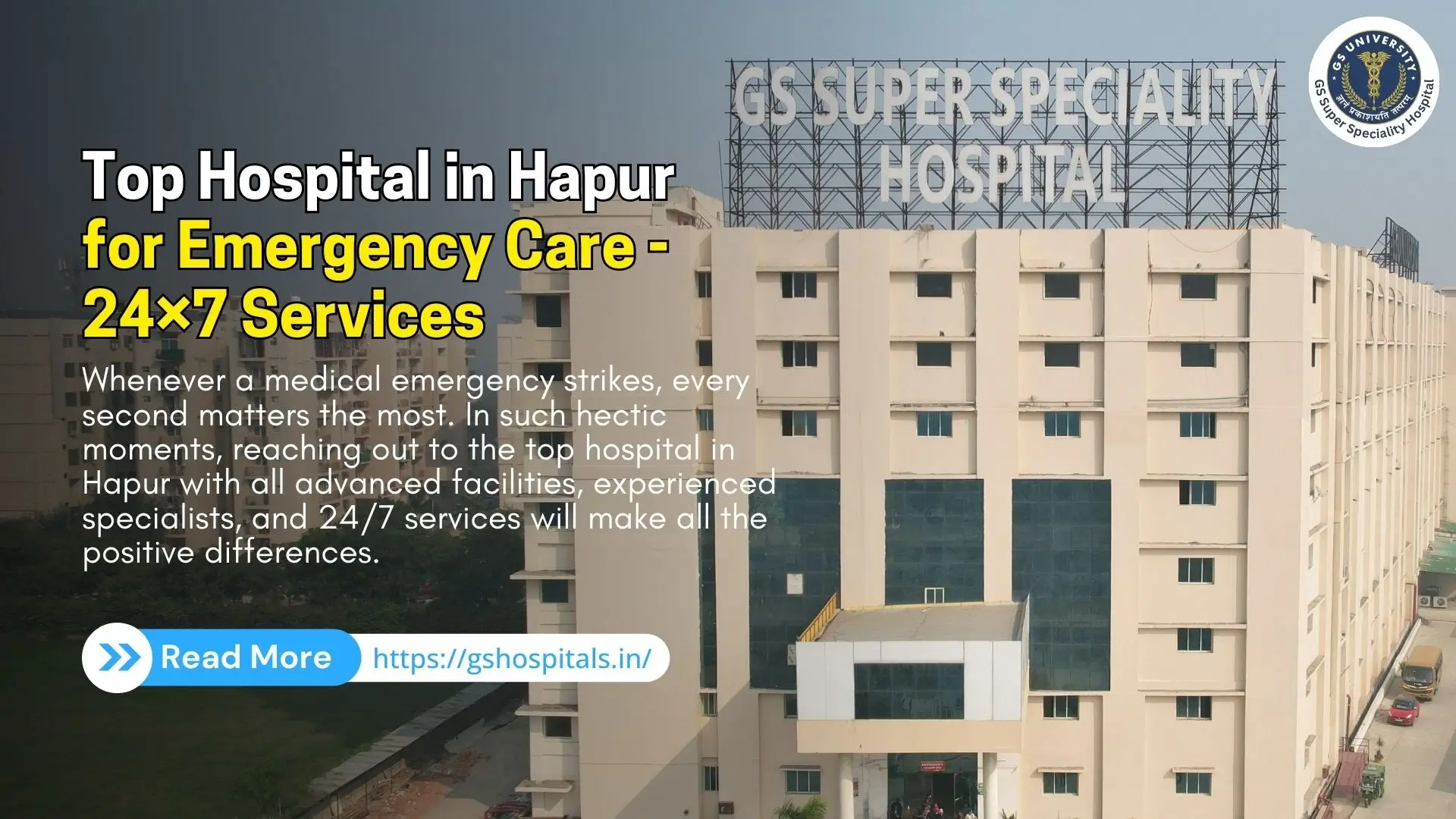
Further, this blog will explore what makes GS Super Speciality Hospital the best hospital in Hapur, emergency care specialities, the pros of multispeciality setup, trauma and critical care services, even ambulance support, and why it is believed to be one of the best hospitals in Delhi NCR for emergency and tertiary care.
Modern lifestyles, disease burden, road accidents, and unexpected health complications have contributed to increased emergency cases in India. Unluckyly, a few unavoidable deaths occur due to delayed treatment, lack of proper stabilization, or lack of emergency facilities. All the emergency care hospital in Hapur should provide:
GS Super Speciality Hospital ticks all these important parameters when maintaining international clinical standards.
GS Super Speciality Hospital, is renowned for its commitment to excellence, also GS Super Speciality Hospital stands out as the best hospital in Hapur, offering comprehensive emergency treatment, trauma, and life-saving services for patients of all ages:
You need to understand that medical emergencies don’t wait for your personal work. GS Super Speciality Hospital operates a talented 24/7 emergency department staffs with emergency physicians, nurses, paramedics, and technicians who are trained to manage:
The hospital follows all the global emergency response rules like the Golden Hour and Platinum 10 Minutes to reduce complications and increase the survival outcomes.
Critical cases need proper monitoring, specialized equipment, and skilled intensivists. GS Super Speciality Hospital offers:
All together it makes it the best critical care hospital in Hapur for patients with life-threatening conditions.
Right from cardiology to neurology, and orthopedics to gastroenterology, GS Hospital remains a leading multispeciality hospital in Hapur with expert doctors available 24×7. This multispeciality setup ensures fast access to:
All these expertise plays a crucial role during emergencies, where several organ systems may be affected.
Road accidents remain one of the leading causes of death in India. A delay of even 15 minutes can turn a survivable accident into a fatal one. GS Super Speciality Hospital’s trauma team provides:
It has established itself as the accident emergency hospital in Hapur trusted by thousands of families.
In any emergency, reaching the hospital in time is half the battle. GS Hospital provides the most reliable Hapur hospital with 24-hour ambulance service equipped with:
The Hapur hospital with 24 hour ambulance service ensures the patient receives life-saving support even before reaching the hospital.
Emergency treatment requires quick decision-making based on accurate diagnosis. GS Hospital provides:
This rapid diagnostic support allows doctors to begin treatment without delay—crucial during heart attacks, strokes, or trauma.
Although located in Hapur, GS Super Speciality Hospital is recognized as one of the best hospitals in Delhi NCR because of:
Residents of Hapur benefit from Delhi-level healthcare without traveling long distances.
The hospital combines compassion with science, making it the preferred choice for emergency and routine care alike.
When an emergency occurs, the first few minutes decide the outcome. Whether it’s a heart attack, stroke, road accident, severe bleeding, or breathing difficulty, patients need help even before they reach the hospital. This is where 24×7 ambulance services play a lifesaving role, especially in rapidly growing regions like Hapur.
A well-equipped ambulance is essentially a “mini-ICU on wheels.” At GS Super Speciality Hospital, recognized as the top hospital in Hapur ambulances are fitted with life-saving tools including ventilators, oxygen cylinders, stretchers, defibrillators, suction machines, and emergency medications. What makes this service even more effective is the presence of trained paramedics who know how to stabilize patients during transport.
The benefit of having a 24-hour ambulance service in Hapur is that patients get immediate medical attention while en route, preventing deterioration during transit. Timely oxygen supply, CPR, bleeding control, cardiac monitoring, and pain management significantly increase survival chances, especially for trauma cases.
Hapur’s proximity to major highways also leads to frequent road accidents. Quick ambulance response ensures that accident victims are shifted to a trauma and ICU care hospital in Hapur within minutes, reducing long-term complications. GS Super Speciality Hospital’s emergency team coordinates with its ambulance drivers in real-time, ensuring seamless transition from the ambulance to the emergency room.
For families across Hapur, this service is not just a facility, it is a reassurance that professional help is available anytime, anywhere. The presence of reliable ambulance support strengthens the entire emergency care ecosystem, making the city better prepared to handle critical situations.
In today’s healthcare landscape, emergencies require more than just quick action—they require holistic and specialized care available instantly. This is why multispeciality hospitals have become essential for improving emergency outcomes in cities like Hapur. Hospitals such as GS Super Speciality Hospital, often considered the best multispeciality hospital in Hapur, offer a major advantage during critical cases by bringing multiple medical specialties under one roof.
Emergency conditions rarely affect just one organ. A heart attack might require a cardiologist, critical care expert, and radiologist. A severe accident may need an orthopedic surgeon, neurosurgeon, anesthetist, and trauma specialist—all working together. Multispeciality hospitals streamline this coordination effortlessly.
At GS Super Speciality Hospital, emergency patients benefit from access to specialists in cardiology, neurology, orthopedics, general surgery, pediatrics, gynecology, nephrology, and pulmonology all available 24×7. This kind of immediate interdisciplinary care prevents delays and speeds up diagnosis, surgery, stabilization, and recovery.
Additionally, multispeciality hospitals come equipped with advanced diagnostics, such as MRI, CT scans, digital X-ray, and round-the-clock laboratory services. This ensures that doctors do not waste precious minutes waiting for reports. In emergencies like stroke, these minutes can determine whether a patient fully recovers or suffers permanent disability.
Such hospitals also provide strong ICU infrastructure, ventilator support, infection control, and post-emergency rehabilitation making them ideal for long-term care.
In conclusion, multispeciality hospitals dramatically improve survival rates, reduce complications, and provide faster, more accurate treatment. For a growing region like Hapur, they are not just beneficial, they are vital for the future of healthcare and emergency services.
Unlike regular vehicles, emergency ambulances are equipped with advanced life-support systems such as oxygen supply, ECG monitors, ventilators, and emergency medication kits. Paramedics in these ambulances can stabilize the patient’s vitals on the spot—managing breathing difficulty, stopping bleeding, controlling pain, or even performing CPR. This early stabilization prevents complications that often occur during transit, significantly improving survival chances.
Standalone clinics often lack specialized doctors, ICU units, and emergency diagnostic tools. Emergencies are unpredictable and may require quick consultations from cardiologists, neurologists, orthopedic surgeons, or critical care experts. A multispeciality hospital ensures immediate access to skilled specialists without shifting the patient elsewhere, reducing delays that could be fatal.
Absolutely. Emergency care is not limited to accidents. Hospitals treat conditions such as severe infection, high fever, severe dehydration, asthma attacks, allergic reactions, epileptic seizures, pregnancy-related emergencies, and sudden abdominal pain. These conditions can escalate quickly, making immediate treatment essential.
The Golden Hour refers to the first 60 minutes after a traumatic injury or medical emergency. Prompt treatment during this period greatly reduces the risk of complications or death. Hospitals with 24×7 emergency care, trained trauma teams, and rapid diagnostics ensure that patients receive life-saving intervention within this critical window.
Yes. Elderly patients are more vulnerable to heart attacks, strokes, falls, respiratory distress, and sudden infections. Quick emergency assessment, multi-speciality support, and ICU care ensure that age-related complications are managed effectively, reducing long-term disabilities.
They offer integrated recovery plans including physiotherapy, rehabilitation, dietary counseling, and follow-ups with specialists. This coordinated approach helps patients heal faster, prevents relapse, and improves long-term quality of life.
Yes. At advanced hospitals like GS Super Speciality Hospital in Hapur, ambulance teams coordinate with the emergency department through real-time communication. Doctors receive patient vitals, symptoms, and pre-treatment details while the patient is still in transit, allowing the hospital to prepare the emergency room and specialist teams in advance.