Ambulance
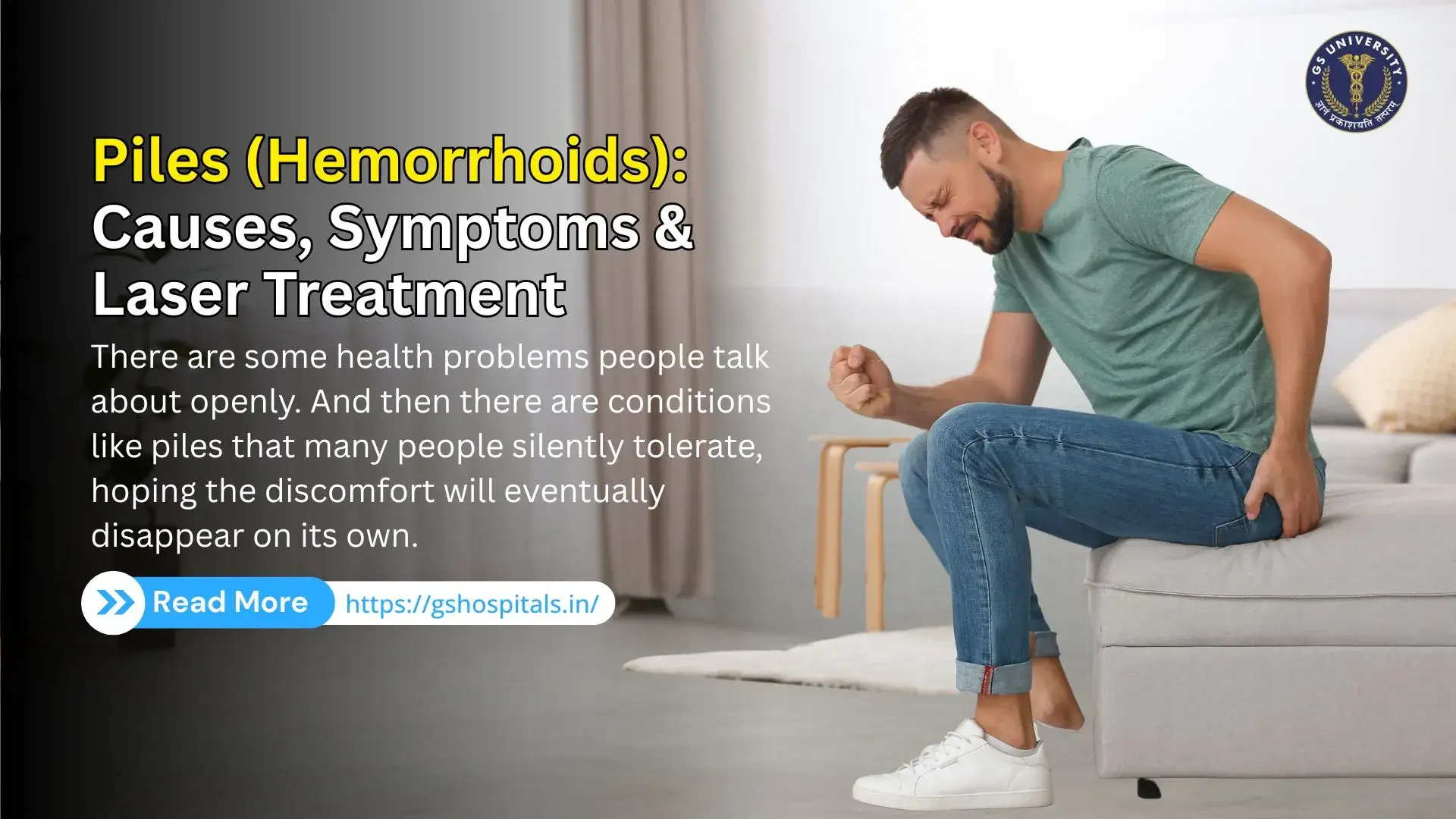
There are some health problems people talk about openly. And then there are conditions like piles that many people silently tolerate, hoping the discomfort will eventually disappear on its own.
If you have ever experienced pain, itching, or bleeding during bowel movements, you might already be familiar with the discomfort piles can cause. Despite being extremely common, many people delay seeking piles treatment simply because they feel embarrassed to discuss it.
The truth is that piles, medically known as hemorrhoids, are a very common condition—and thankfully, they are also highly treatable. With the right care, lifestyle changes, and advanced options like laser treatment for piles , patients can find lasting relief.
At GS Super Speciality Hospital, widely trusted as the Best Hospital in Hapur , expert specialists provide accurate diagnosis and advanced piles treatment using safe and minimally invasive medical technologies.
Let’s explore piles causes, piles symptoms, treatment options, and how to cure piles permanently so that you can understand the condition better and seek help when needed.
Piles are caused by swelling or inflammation in the veins located around the rectum or anus. These veins normally help control bowel movements, but when they are placed under too much pressure, they can enlarge and become painful.
Depending on where they develop, piles are generally divided into two categories.
Internal hemorrhoids develop inside the rectum. Although they generally do not cause pain, bleeding during bowel movements can occur.
External piles occur under the skin surrounding the anus and can result in discomfort such as pain, itching, swelling, and irritation.
While mild cases can sometimes improve with simple lifestyle changes, severe cases often require medical piles treatment to prevent further discomfort and complications.
Many people assume piles appear suddenly, but in reality, they usually develop gradually due to certain lifestyle or health factors.
Let’s look at some of the most common piles causes.
Frequent straining during bowel movements is one of the major factors that can lead to piles. When stools are hard and difficult to pass, the pressure on rectal veins increases, causing swelling.
A diet lacking fruits, vegetables, and whole grains can lead to digestive issues and constipation, increasing the risk of piles.
Many modern jobs involve prolonged sitting, whether at a desk or while driving. Long hours of sitting increase pressure on the lower rectum and can contribute to piles.
During pregnancy, increased pressure in the abdomen and hormonal changes can cause the veins around the anus to swell.
Being overweight puts additional pressure on pelvic veins, increasing the chances of developing hemorrhoids.
Regularly lifting heavy objects can create strain in the abdominal region, which may lead to piles over time.
As we grow older, the tissues supporting rectal veins become weaker, making piles more likely to develop.
Understanding these piles causes is important because prevention often begins with small lifestyle adjustments.
Piles may start with mild irritation but can become increasingly uncomfortable if left untreated. Recognizing piles symptoms early can help you seek medical attention before the condition worsens.
Here are some signs to watch for.
One of the most common piles symptoms is bright red blood on the toilet paper or in the toilet bowl.
External piles often cause pain while sitting or during bowel movements.
Irritation around the anus can cause itching that becomes difficult to ignore.
In some cases, a small lump or swelling may appear near the anal opening.
Some individuals may notice mucus discharge after passing stool.
If these piles symptoms appear frequently, it’s important to consult a specialist. Early piles treatment can prevent the condition from worsening.
Occasional discomfort might not seem serious, but persistent symptoms should never be ignored.
You should consult a doctor if you experience:
At GS Super Speciality Hospital, specialists provide proper diagnosis and advanced piles treatment designed to support faster and more comfortable recovery.
The right piles treatment depends on the severity of the condition and the symptoms experienced by the patient.
Doctors generally recommend a step-by-step approach.
When piles are mild, improving daily habits and lifestyle can help manage the symptoms effectively.
These include:
These habits improve digestion and reduce strain on the rectal veins.
Doctors may prescribe creams, ointments, or medications that reduce swelling and relieve pain.
While medications can provide temporary relief, they may not always eliminate the problem completely.
Some procedures treat piles without major surgery. These include techniques that cut off blood supply to hemorrhoids or shrink swollen veins.
However, when piles become severe or repeatedly return, advanced procedures may be recommended.
Traditional piles surgery used to involve significant pain and long recovery periods. The good news is that modern healthcare now provides a more comfortable and effective option: laser treatment for piles.
In this procedure, surgeons use focused laser energy to shrink swollen hemorrhoidal tissues. The laser seals blood vessels and removes the piles with minimal damage to surrounding tissue.
Many patients today prefer laser treatment for piles because it offers several advantages:
At GS Super Speciality Hospital, advanced laser technology is used to ensure safe and effective treatment for patients suffering from piles.
One of the most common questions patients ask doctors is how to cure piles permanently.
While medical procedures remove existing piles, long-term relief depends on healthy habits that prevent the condition from returning.
Here are some effective steps.
When combined with modern piles treatment, these habits can help patients achieve lasting relief.
Choosing the right healthcare provider plays a major role in successful treatment.
GS Super Speciality Hospital has earned a reputation as the Best Hospital in Hapur for treating piles and other digestive conditions.
Patients choose GS Hospital because of:
The medical team at GS Hospital focuses not just on treating symptoms but on helping patients achieve long-term comfort and better digestive health.
Piles may be a common health problem, but that doesn’t mean you have to live with the discomfort. Recognizing piles symptoms, understanding piles causes, and seeking timely piles treatment can make a significant difference in your health and daily comfort.
Modern medical solutions like laser treatment for piles have made treatment safer, faster, and more comfortable than ever before.
If you or a loved one is experiencing symptoms of piles, consulting specialists at GS Super Speciality Hospital , the Best Hospital in Hapur, can help you receive the right diagnosis and effective treatment.
Remember—taking the first step toward treatment is often the most important step toward relief.
Common piles symptoms include rectal bleeding, itching around the anus, pain during bowel movements, swelling, and lumps near the anal opening.
The most common piles causes include constipation, low-fiber diet, prolonged sitting, pregnancy, obesity, and straining during bowel movements.
No. Laser treatment for piles is considered minimally invasive and usually causes significantly less pain compared to traditional surgery.
Most patients recover within a few days and can resume normal activities quickly after laser treatment for piles.
To cure piles permanently, patients should combine medical treatment with lifestyle changes such as increasing fiber intake, drinking enough water, exercising regularly, and avoiding constipation.