GS Hospital Blog

PCOS Is Common, Manageable, and Nothing to Be Afraid Of

Published On : February 06, 2026

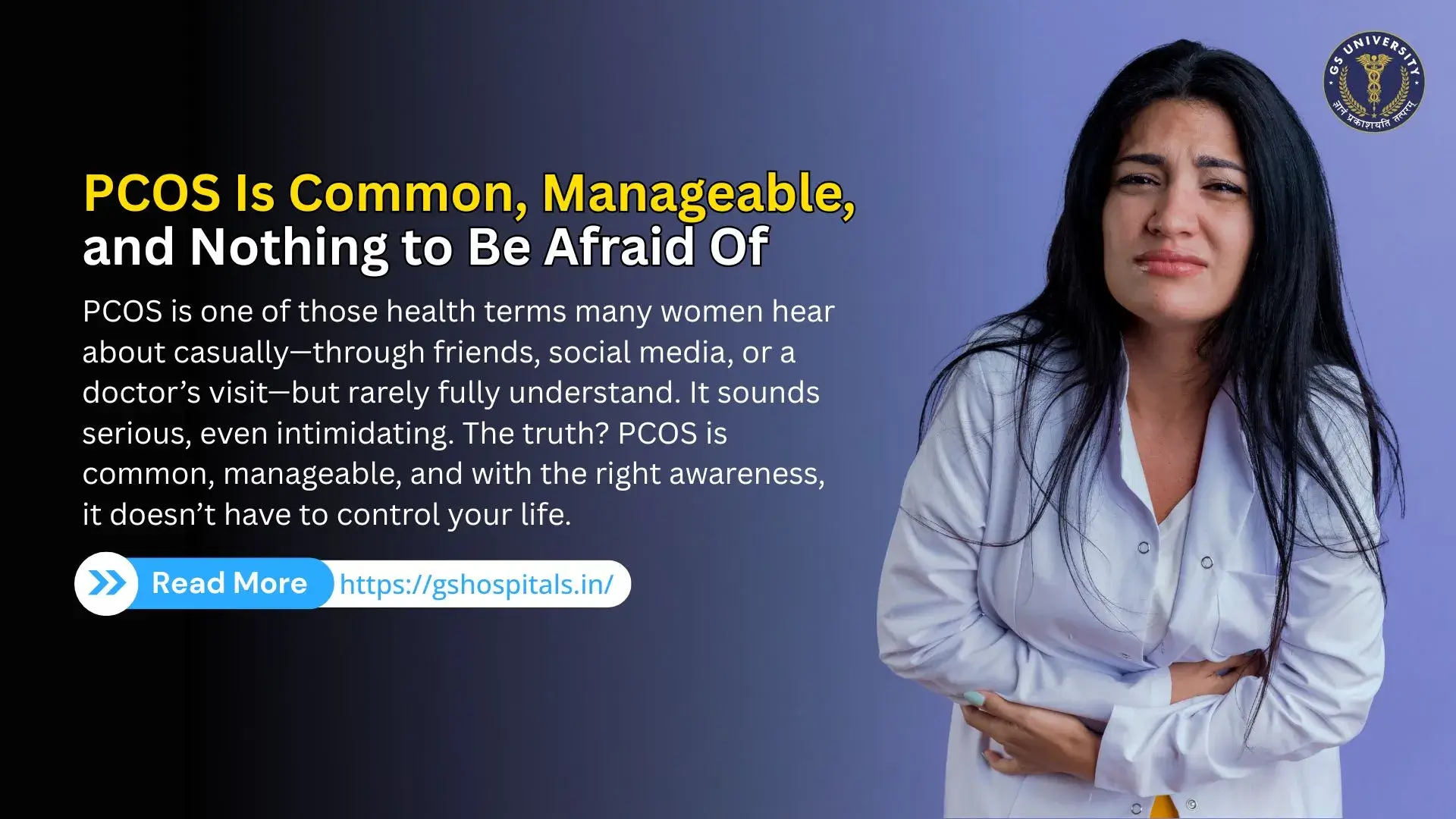
PCOS is one of those health terms many women hear about casually—through friends, social media, or a doctor’s visit—but rarely fully understand. It sounds serious, even intimidating. The truth? PCOS is common, manageable, and with the right awareness, it doesn’t have to control your life..

Polycystic Ovary Syndrome, or PCOS, affects many women during their reproductive years. What makes it tricky is that early signs of PCOS often look like everyday issues—irregular periods, stubborn weight gain, or acne that just won’t go away. Because PCOS symptoms feel “normal,” many women ignore them for years.

The good news is that today, with better awareness and access to expert care—such as at GS Hospital, widely regarded as the Best Hospital in Hapur —women have more clarity, support, and PCOS treatment options than ever before.
PCOS Is Common, Manageable, and Nothing to Be Afraid Of

So, What Exactly Is PCOS? (Let’s Keep It Simple)

Think of PCOS as a condition where your hormones are slightly out of sync. Hormones act like messengers in the body, telling different organs what to do and when. In PCOS, these messages don’t always reach on time—or clearly—especially when it comes to the ovaries.

Because of this imbalance, the ovaries may not release eggs regularly. That’s why periods can become irregular or stop altogether. During scans, doctors may notice many tiny fluid-filled sacs in the ovaries. These aren’t dangerous cysts or tumours—they simply show that ovulation isn’t happening as it should.

What’s important to remember is this:

  • PCOS looks different for every woman.
  • Some notice changes early in life, while others discover it only when planning a pregnancy. With early care, most long-term complications can be avoided.

Early Signs of PCOS: Small Clues Your Body May Be Giving You

PCOS doesn’t arrive loudly—it whispers. Learning to listen to those whispers makes all the difference.

  • Periods That Don’t Follow a Pattern
    If your periods arrive unpredictably, come very late, or disappear for months, it could be your body signalling hormonal imbalance.
  • Heavy Bleeding or Long Gaps
    Some women experience very heavy bleeding, while others barely menstruate at all. Both extremes deserve attention.
  • Skin and Hair Changes
    Sudden acne flare-ups, oily skin, excess facial or body hair, or thinning hair on the scalp can be linked to higher levels of male-type hormones.
  • What Doctors See on a Scan
    During an ultrasound, doctors may notice several tiny follicles in the ovaries. These are not harmful but help doctors understand what’s happening internally.
  • Weight That Feels Stubborn
    Many women with PCOS find that weight gain happens easily, especially around the belly—and weight loss feels unusually difficult despite effort.
  • Blood Sugar Ups and Downs
    PCOS often affects how the body handles insulin. This can lead to sugar cravings, fatigue, and higher blood sugar levels over time.
  • Difficulty Getting Pregnant
    Since ovulation may not occur regularly, PCOS is a common cause of fertility challenges—but with treatment, many women conceive successfully.

If these signs sound familiar, consulting a specialist at GS Hospital which have the Best Gynaecologist can bring clarity and reassurance.

Why Does PCOS Happen?

There isn’t one single cause—but a mix of factors:

  • Family history: PCOS often runs in families
  • Insulin resistance: Makes hormone imbalance worse
  • Low-grade inflammation: Can trigger excess hormone production

Knowing your personal risk factors helps in early care and prevention.

How Doctors Identify PCOS (Without Panic)

PCOS diagnosis isn’t based on one test alone. Doctors look at the full picture—symptoms, hormone levels, and scan results. Usually, two out of three factors help confirm PCOS:

  • Irregular ovulation
  • Signs of high androgen levels
  • Polycystic-looking ovaries on ultrasound

Additional blood tests help rule out other conditions and guide treatment.

At GS Hospital , the Best Gynaecologist and Obstetrician in Ghaziabadfocus on understanding you, not just your reports.

PCOS Treatment: Small Changes, Big Impact

PCOS treatment isn’t about one magic pill—it’s about balance.

  • Lifestyle Comes First
    Simple changes go a long way:
    • Eating balanced meals
    • Staying active
    • Managing stress
    Even small weight loss can improve symptoms significantly.
  • Medications (When Needed)
    Doctors may suggest medicines to:
    • Regulate periods
    • Improve insulin sensitivity
    • Reduce acne or hair growth
    • Support ovulation if pregnancy is planned
  • Skin and Hair Care
    Modern dermatological treatments can help manage visible symptoms comfortably.
  • Emotional Wellbeing Matters
    Living with PCOS can feel frustrating. Counselling, stress management, and emotional support are just as important as medical care.
  • Fertility Support
    If needed, advanced treatments like IVF are available under expert guidance.

Gynaecologists at GS Hospital are considered as the Top Gynaecologists in Ghaziabad . Here, women receive treatment plans designed for long-term wellbeing.

Living Well With PCOS

PCOS doesn’t define you. With awareness, regular follow-ups, healthy habits, and the right medical team, women with PCOS live full, healthy lives.

FAQs: PCOS Explained Simply

1. Is PCOS very common?

Yes, PCOS affects a large number of women and is more common than most people think.

2. Can lifestyle changes really help PCOS?

Absolutely. Diet, exercise, and stress management play a huge role in symptom control.

3. Will PCOS affect my chances of pregnancy?

PCOS may delay ovulation, but with treatment, many women conceive successfully.

4. Do I need lifelong medication for PCOS?

Not always. Treatment changes with age, symptoms, and life goals.

5. Where should I seek PCOS care?

Comprehensive care is available at GS Hospital, supported by some of the Best Gynaecologists in UP and Top Gynaecologists in Ghaziabad.

Best Hospital in Hapur | PCOS symptoms