Ambulance

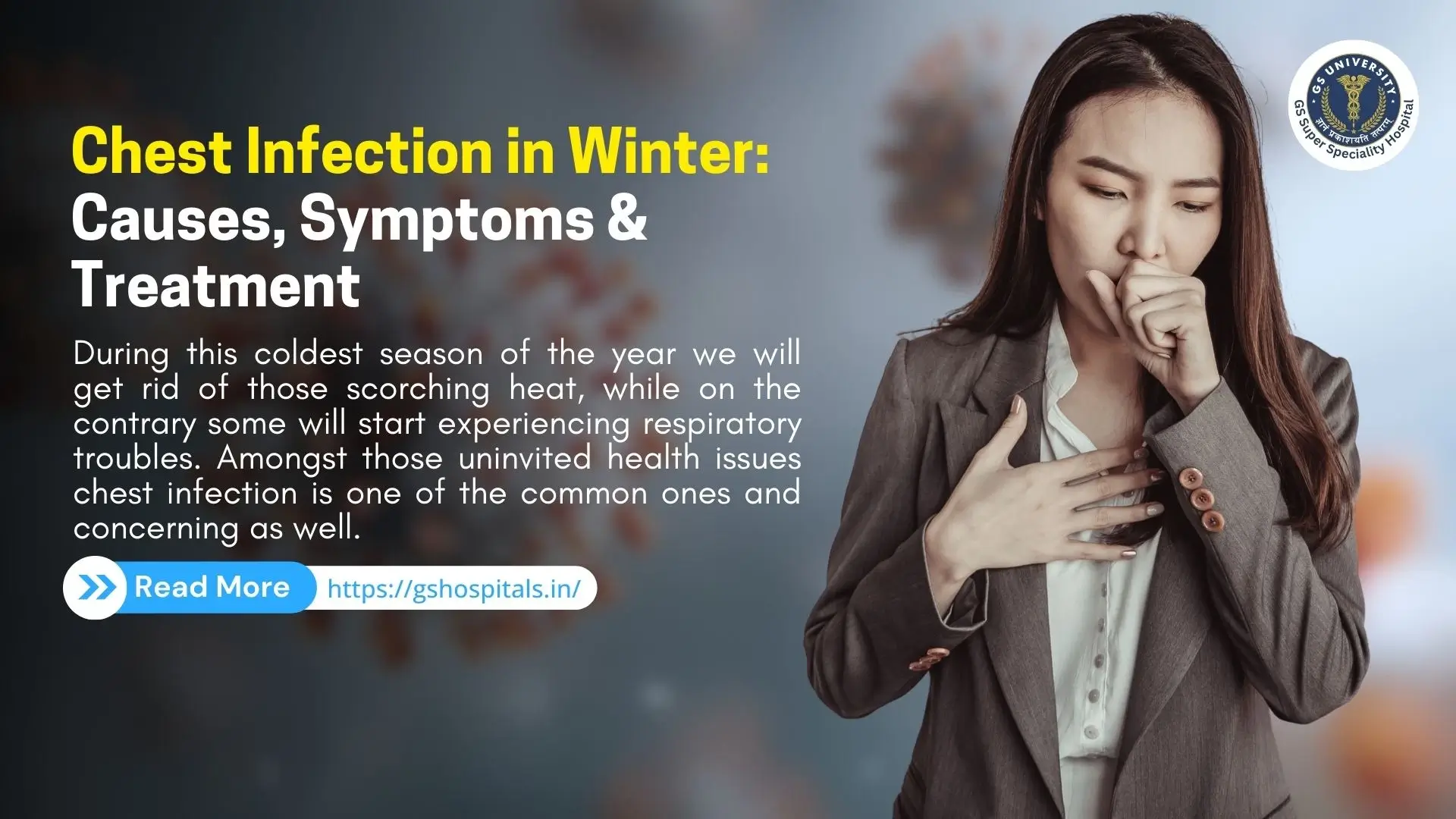
During this coldest season of the year we will get rid of those scorching heat, while on the contrary some will start experiencing respiratory troubles. Amongst those uninvited health issues chest infection is one of the common ones and concerning as well. It can be chronic cough, issues with breathing, chest tightness, or fever, always remember that chest infection will quite quickly worsen when overlooked. That’s why being aware of the causes, symptoms, risk factors, and treatment options is crucial, notably for the ones who are living in the colder regions of the earth or with existing respiratory problems.
Year-by-year, hospitals across India, including GS Super Speciality Hospital , witnesses a significant rise in cases of winter breathing emergencies, chronic cough, and chest-related issues. If you are a resident of Hapur and NCR, being aware of when to get medical help and where to get the best care like the best hospital in Delhi NCR or a trusted facility for chest infection treatment in Hapur will make a world of difference.
A chest infection is nothing but an infection that disturbs the lungs or lower respiratory tract. It involves:
Chest infections can be viral, bacterial, or at times be fungal, notably each requires different types of treatment and care. Typically when the air gets cold the respiratory system becomes more vulnerable to infections due to low immunity, increased pollution levels, and indoor crowding.
Airways will get irritated when breathing the cold air, mucous membrane will be dried, and eventually the lung's ability to trap germs will be decreased. This will develop a suitable environment for viruses and bacteria to strive.
In the winter season, naturally individuals' immunity will be reduced. Low sunlight results in reduced Vitamin D levels, making the body less capable to combat infections.
Typically, during winter individuals will stay indoors in poorly ventilated rooms. So easily respiratory viruses will spread among family members, colleagues in the office, and students in a class room.
Seasonal flu, RSV, COVID-19, and other respiratory viruses will be highly active during winter months. While viral infections will weaken the lungs, making you more prone to secondary bacterial pneumonia.
Residents of Delhi NCR and nearby cities such as Hapur will be severely polluted during winter. While smog irritates the airways, which makes your lungs more prone to infections.
There are ranges of chest infection symptoms right from mild to severe. Often individuals will ignore early warning signs such as simple cold, but overlooking symptoms will result in serious complications, like:
Prolonged cough for more than 3 to 5 days, along with mucus denotes a lower respiratory tract infection.
Trouble breathing is the significant indicator of a winter breathing emergency.
This highlights the inflammation in airways or lungs.
High temperature suggests bacterial pneumonia.
One should overlook symptoms like yellow, green, or blood-stained mucus.
Individual’s bodies will go into fighting infection, and cause weakness.
A sign of narrowing airway is widely noticed in asthma patients in the winter season.
In case the symptoms aggravate or persist, you should get immediate medical help at a hospital which offers severe cough hospital care and respiratory support.
Often viral, causes cough, breathlessness, and mucus.
A serious lung infection that can be viral or bacterial, which requires appropriate treatment and at times hospitalization.
Caused by RSV and which commonly affects the infants.
Inflamed airways will be triggered during winter, which surges the risk of infection.
Post flu, the lungs remain inflamed and will easily get affected by secondary infection.
In case you fall under any of the above-mentioned categories, you should stay watchful and should be aware when to visit the hospital for chest infection .
These signs indicate a winter breathing emergency that requires urgent hospital attention. Facilities like GS Super Speciality Hospital, known as one of the best hospitals in Delhi NCR , offer advanced respiratory care, oxygen support, ICU services, and pneumonia management.
A diagnostic evaluation helps doctors identify the cause and severity of your condition. It may include:
Accurate diagnosis ensures timely and effective hospital care for winter respiratory problems.
The treatment depends on the type and cause of the infection.
Viral infections usually resolve on their own but require supportive care:
Bacterial pneumonia and bronchitis require:
If symptoms worsen, hospitalization may be necessary. Hospitals like GS Super Speciality Hospital provide:
If you are looking for chest infection treatment in Hapur , GS Super Speciality Hospital offers round-the-clock emergency and respiratory care with experienced pulmonologists.
While home care cannot replace medical treatment, it can support recovery:
Protect your chest and neck from cold winds.
Consume citrus fruits, nuts, warm soups, and herbal teas.
Flu vaccine and pneumonia vaccine are recommended for high-risk groups.
Smoking weakens lung function and increases infection risk.
Especially important in Delhi NCR during winter smog.
Reduces risk of viral infections.
Regular exercise helps keep your lungs strong.
GS Super Speciality Hospital is known for its excellence in respiratory care, making it one of the best hospitals in Delhi NCR and a preferred facility for chest infection treatment in Hapur.
Whether it's a winter breathing emergency, pneumonia, or severe cough, the hospital ensures timely, accurate, and effective treatment.
Repeated winter chest infections usually indicate underlying airway sensitivity. Cold air narrows the bronchial tubes, making them more prone to inflammation. Some people also have undiagnosed allergic bronchitis or mild asthma that becomes active only during winter. Persistent exposure to winter smog in cities like Delhi NCR worsens this issue. If you develop chest infections every winter, you should undergo a lung function test and consult a specialist for preventive management at a centre like GS Super Speciality Hospital, known for quality hospital care for winter respiratory problems.
Surprisingly, yes. Many patients misinterpret the early signs of a chest infection as acidity because both can cause chest tightness. But with a chest infection, the discomfort worsens while breathing deeply or coughing. If you are confused, especially in winter, it’s safer to get evaluated. Misdiagnosing yourself may delay treatment, increasing the risk of a winter breathing emergency.
Winter pollution contains high levels of particulate matter (PM2.5) that irritate the lungs. This weakens the respiratory lining and reduces the lungs’ ability to fight infection. When combined with cold air, this irritation accelerates inflammation, making infections easier to develop and harder to resolve. Residents exposed to pollution may require severe cough hospital care sooner than they expect.
Yes. Cold weather drives people indoors, and poorly ventilated spaces make it easier for viruses to spread. Shared bedding, close sleeping arrangements, and using room heaters without a fresh air source can trap airborne germs. This is why families often fall sick one after another during the season. Proper ventilation and avoiding sharing towels or utensils can reduce transmission.
Absolutely. Viral infections weaken the lung tissue, making room for bacteria to settle and cause pneumonia. This is particularly common in winter when immunity is low. High fever, worsening cough, and breathlessness after the flu are warning signs. If this happens, you must know when to visit the hospital for chest infection—ideally as soon as symptoms escalate.
Older adults have weaker immunity, reduced lung capacity, and slower healing. Cold temperatures further restrict their breathing. Pneumonia can worsen rapidly in seniors, leading to dangerously low oxygen levels. They require prompt medical intervention, often including oxygen therapy or nebulization. In such cases, accessing reliable healthcare like GS Super Speciality Hospital, recognised as one of the best hospitals in Delhi NCR, becomes crucial.
No. A dry cough may simply be due to cold air, pollution, or throat irritation. However, if a dry cough turns painful or is accompanied by fever, breathlessness, or fatigue, it might be the early stage of a chest infection. Monitor your symptoms closely; a sudden shift in cough nature can signal the need for early medical evaluation.
Home remedies like warm fluids, ginger tea, steam inhalation, and honey can soothe symptoms, but they cannot eliminate infections—especially bacterial ones. If symptoms persist beyond 2–3 days or worsen, relying solely on home remedies can be dangerous. Winter chest infections require proper diagnosis, and in many cases, antibiotics or hospital care. Facilities offering chest infection treatment in Hapur provide timely evaluations to prevent complications.
Asthma and COPD patients already have inflamed or narrowed airways. Winter cold, viral infections, and pollution further irritate their lungs, leading to severe flare-ups. For them, even a mild chest infection can quickly turn into a winter breathing emergency. Preventive inhalers, masks, warm clothing, and early diagnosis are essential during the season.
Beyond common symptoms like fever and cough, unusual signs include confusion, low appetite, bluish lips, fainting spells, and extreme tiredness. These indicate dropping oxygen levels or worsening lung function. Such symptoms should never be ignored—they demand urgent severe cough hospital care or hospital care for winter respiratory problems, ideally at an advanced facility like GS Super Speciality Hospital.