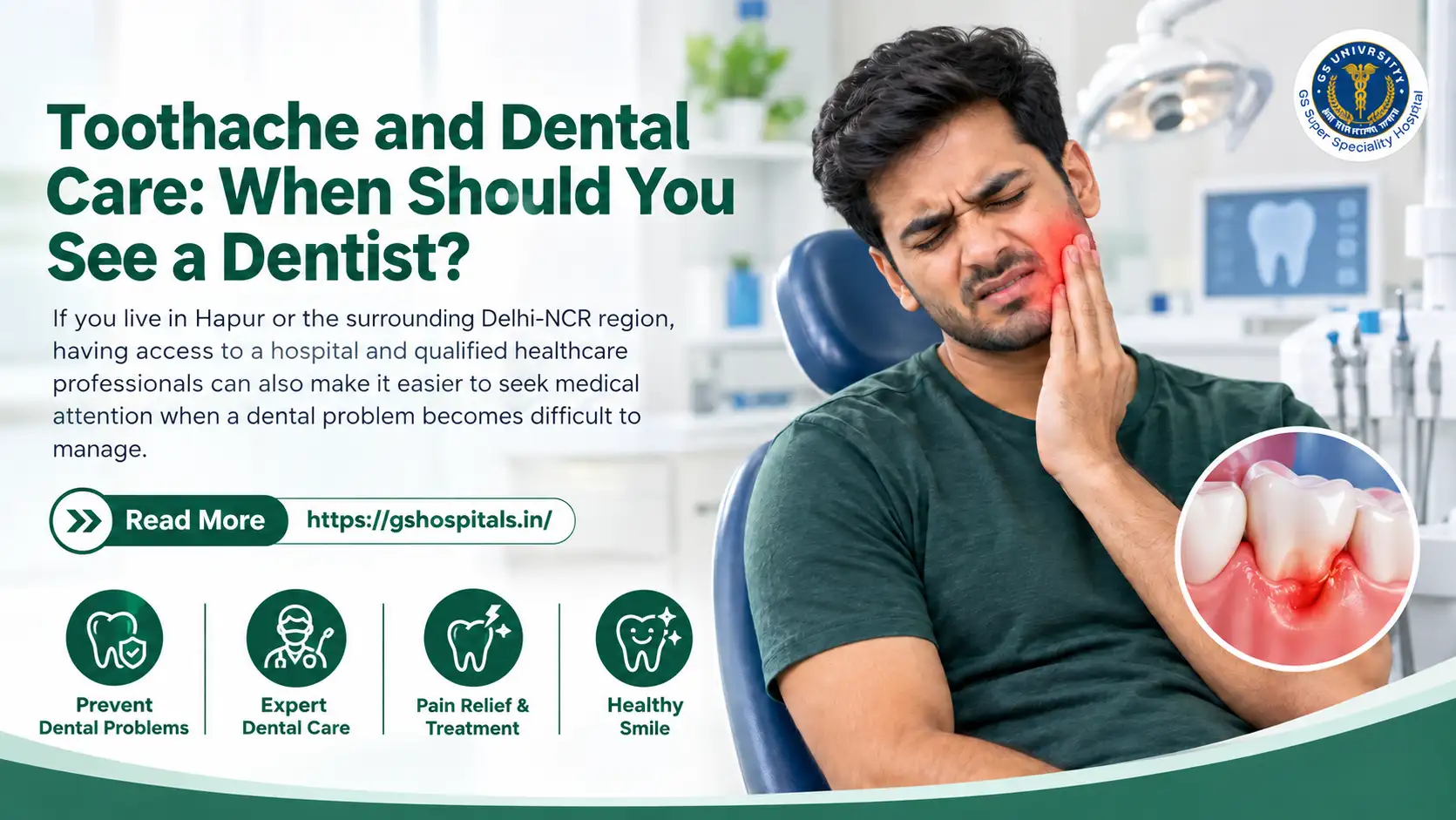
Toothache and Dental Care: When Should You See a Dentist?
A tooth can hurt for many different reasons, and the pain does not always tell you how serious the problem is.
Sometimes it is a brief twinge after having a cold drink. Sometimes it is a dull ache that appears only while chewing. Many people wait for a few days, take a painkiller, avoid the food that triggers the discomfort and hope everything settles down.
That approach can be risky.
Tooth pain is often a warning that something is happening inside or around the tooth. It could be a small cavity, gum inflammation, sensitivity, a cracked tooth or an infection. The earlier the cause is identified, the more straightforward the treatment may be. That's why early intervention is important for good dental care.
If you live in Hapur or the surrounding Delhi-NCR region, having access to a hospital and qualified healthcare professionals can also make it easier to seek medical attention when a dental problem becomes difficult to manage.
A Toothache Is a Symptom, Not a Diagnosis
One of the easiest mistakes to make is assuming that all toothaches mean the same thing, but actually they don't.
Imagine two people complaining about pain in a back tooth. One may have food repeatedly getting stuck between the teeth and irritating the gums. The other may have deep decay that has reached the inner portion of the tooth. Both may describe their problem simply as a "toothache", but their treatment needs could be completely different.
This is why trying to diagnose yourself based only on the location or intensity of the pain is not a good idea.
What Can Cause Tooth Pain?
There are several possible reasons behind tooth pain. Some are minor and easily manageable, while others need timely treatment.
Tooth Decay
A cavity may develop quietly for quite some time without you noticing it. But as the damaged area becomes deeper, sensitivity or pain can start appearing.
You may notice discomfort when eating sweets or drinking something hot or cold. If the decay continues to progress, the pain can become more frequent.
This is one reason regular dental check-ups matter. Waiting until a cavity hurts badly may mean that the problem has already progressed.
Sensitive Teeth
A sharp, sudden sensation after eating ice cream or drinking chilled water is familiar to many people.
Tooth sensitivity can be associated with worn enamel, exposed tooth surfaces, gum recession, aggressive brushing or certain dental conditions. If sensitivity is frequent, then you must visit a dentist to be doubly sure of any impending serious tooth problem.
There is an important difference between an occasional brief sensation and pain that keeps happening.
Problems With the Gums
If your gums frequently bleed when brushing, appear swollen or feel tender, don't simply assume that it is normal. In some people, gum problems develop gradually without causing much pain. That makes regular observation particularly important.
A Cracked or Chipped Tooth
A tooth does not have to be completely broken to cause trouble.
A small crack can sometimes produce pain while biting or sensitivity when you release your bite. The discomfort may appear only occasionally, making it tempting to ignore.
If you know that a tooth has cracked or chipped, especially after an injury or biting something hard, arrange a dental assessment.
Dental Infection
An untreated cavity, damaged tooth or other dental problem can sometimes result in infection.
Possible warning signs include significant tooth pain, swelling, tenderness, a bad taste in the mouth, fever or swelling around the jaw or face.
An infection should not be treated as something that will necessarily disappear by itself. Professional assessment is important.
Wisdom Teeth
Wisdom teeth are another common source of discomfort, particularly when there is insufficient room for them to emerge properly.
Pain at the back of the mouth, swollen gums, difficulty cleaning the area or repeated inflammation around a wisdom tooth should be checked by a dental professional.
So, When Should You Actually See a Dentist?
You don't have to wait until you are in unbearable pain.
A dental appointment is worth considering when:
- Tooth pain continues instead of settling down.
- The same tooth repeatedly becomes painful.
- You feel pain while biting or chewing.
- Cold or hot foods consistently trigger discomfort.
- Your gums bleed regularly.
- Your gums are swollen or unusually tender.
- You notice swelling around a tooth or jaw.
- You have a fully broken or half-broken tooth.
- You experience bad breath or bad taste.
- You are avoiding certain foods because they cause pain.
- Tooth discomfort is affecting your sleep.
- A previous dental problem appears to be returning.
A useful rule is simple: if a dental symptom keeps coming back, don't keep treating it as an occasional inconvenience. Find out why it is happening.
What If the Toothache Goes Away?
This is where people often get caught out.
Suppose a tooth hurts for two days and then suddenly feels completely normal. It is tempting to conclude that the problem has disappeared.
Some dental conditions can cause intermittent pain. Therefore, if the same tooth repeatedly gives you trouble, it is sensible to have it examined even if you happen to be pain-free on the day of your appointment.
Severe Tooth Pain: Don't Keep Waiting
There is a difference between making a routine dental appointment and seeking urgent attention.
Severe pain accompanied by substantial swelling, fever, or difficulty swallowing or breathing deserves prompt medical evaluation.
Facial swelling associated with a dental problem should not be ignored, particularly if it is increasing. The important thing is not to panic, but also not to delay when warning signs are significant.
Does Every Toothache Need a Root Canal?
A toothache does not automatically mean that a root canal treatment is required. Depending on the situation, treatment may involve something as simple as removing decay and restoring the tooth, addressing a gum problem, managing sensitivity, repairing damage, or using another appropriate dental procedure.
A dentist can determine the treatment after examining the tooth and, when necessary, carrying out appropriate diagnostic tests.
So, don't assume that pain equals root canal, and don't avoid seeing a dentist because you are afraid that it might.
Why Preventive Dental Care Is Worth the Effort
Most people brush their teeth at least once, but what is sometimes overlooked is the value of looking after oral health before there is a problem.
Preventive dental care is about noticing changes early.
During a dental examination, a professional may identify problems that aren't yet causing noticeable pain. This can include early decay, gum-related issues, worn tooth surfaces or other changes that may require attention.
Think about it this way: if you wait until something hurts badly, you are reacting to a problem. Regular dental care gives you an opportunity to identify potential problems earlier.
Teeth Cleaning: Is Brushing Enough?
Brushing is essential, but it doesn't necessarily remove every deposit from every part of your mouth.
Over time deposits turn into plaque and plaque into tartar, and once it has formed, ordinary brushing cannot simply brush it away. Here, professional teeth cleaning is required. During the process, deposits around the teeth and gumline can be removed using appropriate dental instruments. The teeth may also be polished to remove certain surface deposits and stains. Professional cleaning is not a replacement for brushing but an extra care for your teeth.
How Often Should You Get Teeth Cleaning?
There isn't a universal number of visits that is right for every person.
Someone who maintains good oral hygiene and has relatively few dental problems may have different needs from someone who develops tartar quickly or has a history of gum disease.
Instead of following a schedule copied from someone else, follow the recommendation that fits your oral-health needs.
Your Daily Dental Routine
Professional treatment is important when something goes wrong, but what you do at home every day has a major role in maintaining oral health.
Brush Regularly
Brush your teeth twice a day using fluoride toothpaste, unless your dental professional has advised you otherwise.
Don't Forget Between the Teeth
Food particles and plaque can remain between teeth even after brushing and that's why flossing is important.
Be Careful With Sugary Foods
You don't necessarily have to eliminate every sweet food from your life, but frequently eating sweets can increase the risk of tooth decay.
Pay attention not only to how much sugar you consume but also to how frequently your teeth are exposed to it.
Drink Enough Water
Water is a simple addition to a healthy oral-care routine. It can help rinse the mouth after eating and supports normal saliva production.
Don't Use Your Teeth as Tools
Opening packaging, biting pen caps, cracking nuts or tearing things with your teeth may seem harmless in the moment. It can, however, lead to chips or cracks.
Use the appropriate tool instead of your teeth.
What About Toothache in Children?
A child may complain about a tooth, stop chewing on one side, avoid cold or hot foods, become irritable during meals or wake up during the night.
Parents should pay attention to these changes. Parents can also make dental care easier for children by establishing regular brushing habits and introducing dental visits as a normal part of healthcare rather than something that happens only when there is pain.
What To Do Till You See a Dentist?
If you have mild tooth discomfort and are waiting for an appointment, you can take some basic steps to keep the area comfortable.
Keep the mouth clean, brush gently, and carefully clean between the teeth if food may be trapped there. You can rinse your mouth with warm water and temporarily avoid foods or drinks that clearly trigger the pain.
If you normally take an over-the-counter pain medicine, follow the label instructions and make sure it is suitable for you.
Most importantly, don't use temporary pain relief as a reason to postpone necessary dental treatment.
Also avoid placing aspirin or other medicines directly against the gum or painful tooth. Such practices can irritate oral tissues.
Habits That Can Quietly Affect Your Teeth
Several everyday habits can contribute to your current dental health.
- Brushing with excessive force: Scrubbing harder does not necessarily clean better and may irritate the gums.
- Constant snacking: Repeated exposure to sugary foods and drinks gives the bacteria in dental plaque more opportunities to produce acids.
- Ignoring bleeding: Regular gum bleeding deserves attention rather than being dismissed as something everyone experiences.
- Skipping dental visits: A lack of pain does not guarantee that there is no dental problem.
- Using tobacco products: Tobacco use can adversely affect oral health and is associated with several serious oral conditions. If you use tobacco, discuss your oral-health risks with a healthcare professional.
Dental Care Should Be Part of Your Healthcare Routine
We often think of healthcare in terms of major illnesses, blood tests and regular physical check-ups. Oral health can easily be pushed down the list until something hurts.
But your mouth deserves the same attention. Brush properly, clean between your teeth, be mindful of your diet, don't ignore unusual symptoms and visit a dentist when necessary.
Choosing Healthcare in Hapur
When dental or other health concerns require professional attention, people naturally look for reliable healthcare facilities close to home.
GS Super Speciality Hospital, Hapur serves patients from Hapur and surrounding areas and is part of the wider healthcare landscape of the Delhi-NCR region.
For anyone searching for the Best Hospital in Hapur or considering healthcare facilities in the Delhi-NCR area, it is useful to look beyond advertising claims and consider practical factors such as the availability of relevant specialists, diagnostic facilities, emergency support, infrastructure and patient-care services.
If you are experiencing a dental problem, seek evaluation from a qualified dental professional who can determine the cause of your symptoms and guide you towards appropriate treatment.
Don't Wait For The Tooth Pain
Nobody plans their day around a toothache. Yet once the pain becomes severe, it can affect almost everything, including eating, sleeping, working and even your mood.
The simplest way to avoid unnecessary trouble is to pay attention to early signs.
A little sensitivity that keeps returning, gums that regularly bleed, discomfort while chewing or a tooth that has changed in appearance may all be reasons to seek professional advice.
You don't need to wait for severe tooth pain before taking action.
Good dental care is less about reacting to pain and more about taking care of your teeth consistently. Regular brushing, cleaning between the teeth, appropriate teeth cleaning, sensible food habits and timely dental check-ups can help you maintain your oral health for the long term.
And when something doesn't feel right, listen to the warning.
Your teeth are worth taking care of before the problem becomes difficult to ignore.